
In this technical article, you will learn everything you need to know about plasma technology, including process types, plasma effects, areas of application, and the practical benefits of plasma technology.
Plasma Technology Explained Simply
Plasma technology is used for the surface treatment (also known as surface modification) of components and materials. In this industrial process, surfaces are treated in systems using plasma, an ionized gas or the fourth state of matter.
Plasma Surface Modification
In plasma surface modification, material surfaces—such as metals, plastics, textiles, or glass—are cleaned, activated, coated, or etched at the molecular level.
Plasma Cleaning – Ultra-Precision Cleaning
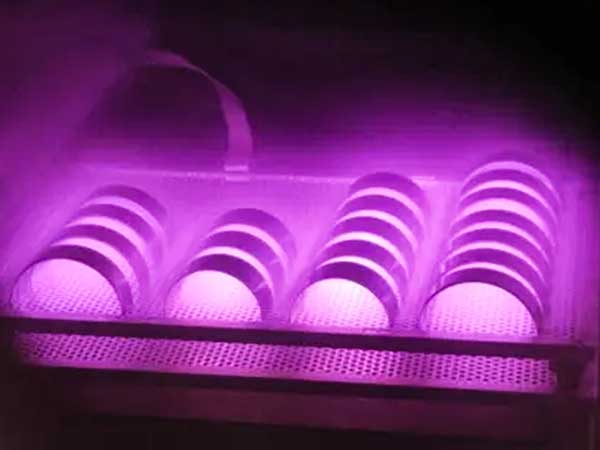 Plasma cleaning, or ultra-precision cleaning, of surfaces is a key application of low-pressure plasma technology. In this process, contaminants are removed from material surfaces through bombardment and chemical reactions with ionized gases, and are then evacuated via a vacuum pump.
In addition, micro-sandblasting can be used to mechanically remove stubborn residues and treat surfaces in a targeted manner. This combined approach ensures residue-free cleaning and optimally prepares the components for subsequent processing or coating processes.
You can also find detailed and comprehensive information in our in-depth article on plasma cleaning.
Plasma Activation
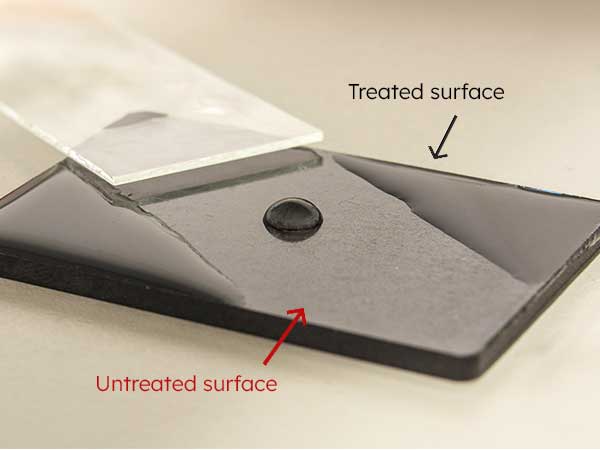 Plasma activation increases the surface energy of materials, removes microscopic contaminants, and modifies surface adhesion to improve the results of industrial bonding, painting, and printing processes.
Furthermore, this form of plasma technology enhances the durability and quality of coatings and paints, as well as the strength of bonded joints.
Through plasma etching or plasma texturing, the reactive species in the plasma remove material from the surface of the substrate. The resulting microstructure creates a larger surface area, which provides more bonding sites for the applied material and, in particular, offers better wettability for liquids.
Plasma Coating and PVD Coating
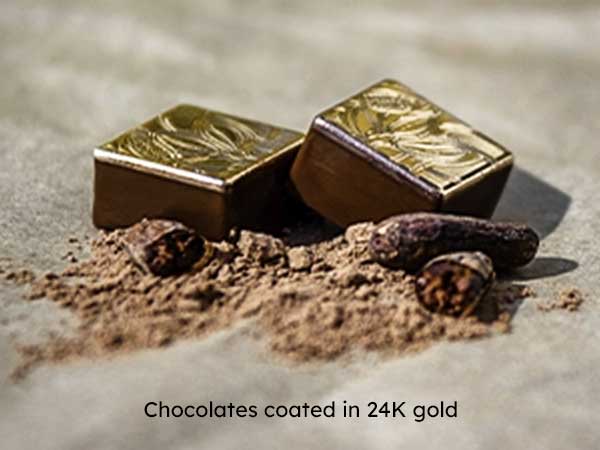 Plasma coating is a manufacturing process in plasma technology in which materials are coated with an ultra-thin layer (thin-film technology). By introducing monomers, polymers are deposited, imparting new surface properties to the coated workpiece.
The type of monomer selected, as well as the process gases, determine the functionality (hydrophilic, hydrophobic, anti-fog, scratch-resistant, etc.) of the polymerized layer. Additionally, adhesion-promoting functional layers (plasma primers) can be created to serve as a bond between the base material and the subsequent coating. Plasma coating, like activation, is an efficient plasma technology for finishing material surfaces and increases their wear and corrosion resistance.
In PVD coating, atoms are released from the surface of a target (e.g., a metal plate) and deposit onto the surfaces of a component. This process can be used, for example, to metallize surfaces. The layers are very thin (in the nanometer range) and therefore do not alter the component’s volume.
Plasma Etching (Micro-Sandblasting)
Plasma etching is a precise process for removing minute amounts of material at the micro-scale in order to modify extremely fine surface properties or create the finest structures. Plasma etching of polymer surfaces is achieved through extended exposure times.
The removal of material and the resulting roughening of the surface provide a larger surface area for the coating material. Plasma etching of the surface is necessary to improve adhesion, particularly for high-performance plastics such as PTFE, POM, PA, and PEEK. This plasma technology process is a key factor, especially in the semiconductor and microelectronics industries.
Plasma Surface Treatment: A Simple Overview
- Plasma cleaning is a highly precise cleaning process for material surfaces designed to remove organic contaminants, such as oil, grease, or release agents.
- Plasma activation, also known as functionalization, increases the surface energy of materials to improve adhesion and enhance wettability.
- In plasma coating, a functional and ultra-thin layer (usually in the nanometer range) is applied to achieve hydrophobic, hydrophilic, or corrosion-protective effects.
- Plasma etching is a targeted material removal process that enables precise surface structuring (also cleaning, but by subtraction rather than functionalization) at the nanoscale.
Plasma Treatment Systems
A plasma treatment system cleans, activates, coats, or modifies a wide variety of material surfaces, such as metal, plastic, glass, or textiles. The two best-known and most advanced types of plasma systems are low-pressure plasma systems and atmospheric-pressure plasma systems.
Low-Pressure Plasma Systems
In a low-pressure plasma system (vacuum plasma), artificial plasma is generated in a vacuum chamber by applying energy. The workpiece to be treated is placed in this chamber and modified in a targeted manner. The use of low-pressure plasma in the closed chamber also enables efficient plasma treatment of 3D geometries.
During the process, fresh gas is continuously supplied and the spent gas is extracted. The pressure range is typically between 0.1 and 1.0 mbar. After the treatment is complete, the chamber is vented and the treated item is removed.
Atmospheric Pressure Plasma Systems
An atmospheric pressure plasma system (Openair plasma) generates plasma under ambient conditions and does not require a vacuum chamber. Since a vacuum chamber is not necessary, these systems are somewhat more affordable and can be used for inline processes (e.g., production lines).
The disadvantages of these systems include lower precision, a limited effective range, and geometric constraints when performing plasma treatments at atmospheric pressure compared to low-pressure plasma.
Plasma Technology: Areas of Application
(Low-pressure) plasma technology has many areas of application and is therefore used across a variety of industries. The most common areas of application and industrial sectors include, for example, the automotive, semiconductor, plastics, packaging, metal, textile, and medical industries.
Consequently, plasma technology must meet many industrial requirements and be adapted for specific processes and techniques. As a leading manufacturer of plasma systems, we at plasma technology specialize precisely in this area. An overview of our customers and industries that rely on innovative plasma technology follows below:
Automotive Industry
Plasma technology is an essential factor in the automotive industry for the treatment of many components.
- Removal of manufacturing residues through plasma cleaning.
- Removal of silicone residues through plasma cleaning.
- Plasma activation as a pretreatment for bonding or painting.
- Plasma etching of high-performance plastics.
- Plasma coating as an adhesion promoter (plasma primer).
Electrical and Electronics Industry
Plasma technology is extremely important in the electrical and electronics industry when it comes to applying ultra-thin coatings or cleaning components.
- Bond pretreatment via plasma cleaning.
- Borehole cleaning via desmearing.
- Removal of silicone residues via plasma cleaning.
- Soldering pretreatment via plasma cleaning.
- PECVD coating and plasma etching.
Plastics Industry, Packaging Technology, and Elastomer Technology
In the plastics industry, packaging technology, and elastomer technology, plasma technology is a precise, gentle, and environmentally friendly method for optimizing surfaces such as PP, PE, EPDM, or PC.
- Removal of manufacturing residues through plasma cleaning.
- Removal of silicone residues via plasma cleaning.
- Removal or elimination of bacteria or germs via plasma sterilization.
- Plasma activation as a pretreatment for bonding or painting.
- Plasma etching of high-performance plastics.
- Plasma coating as an adhesion promoter (plasma primer).
Medical Technology
In medical technology, cold plasma is essential for sterilization, wound healing, and dermatology, as it effectively kills germs and bacteria. Plasma technology is also important for coating medical devices and much more.
- Removal of manufacturing residues through plasma cleaning.
- Removal of silicone residues through plasma cleaning.
- Removal of oxides through surface reduction with plasma.
- Corrosion-resistant surfaces through plasma coating.
- Plasma coating to improve sliding properties.
- Removal of bacteria or germs through plasma sterilization.
- Activation of plastic surfaces for further processing.
Metal Industry
In the metal industry, plasma technology is an indispensable high-performance process because it involves working at extremely high temperatures. Whether it’s precision plasma cutting, activation, ultra-fine cleaning, coating, or plasma etching, this industry requires versatile plasma processes and techniques.
- Removal of manufacturing residues through plasma cleaning.
- Removal of silicone residues through plasma cleaning.
- Removal of oxides through surface reduction with plasma.
- Plasma coating as corrosion protection.
- Plasma coating to improve sliding properties.
- Plasma coating as an adhesion promoter (plasma primer).
Textile Industry
Plasma technology is an environmentally friendly, gentle, and modern method for finishing textiles. Hydrophobization (water repellency), hydrophilization (wettability and dyeability), and functionalization (cleaning) are important plasma applications for the textile industry.
- Improvement of textile wettability through plasma pretreatment.
- Improvement of sliding properties.
- Plasma coating with hydrophobic properties.
- Plasma coating with hydrophilic properties.